PRODUCT dESIGN | 2018 - 2022
Kortext: Redesigning for the real user
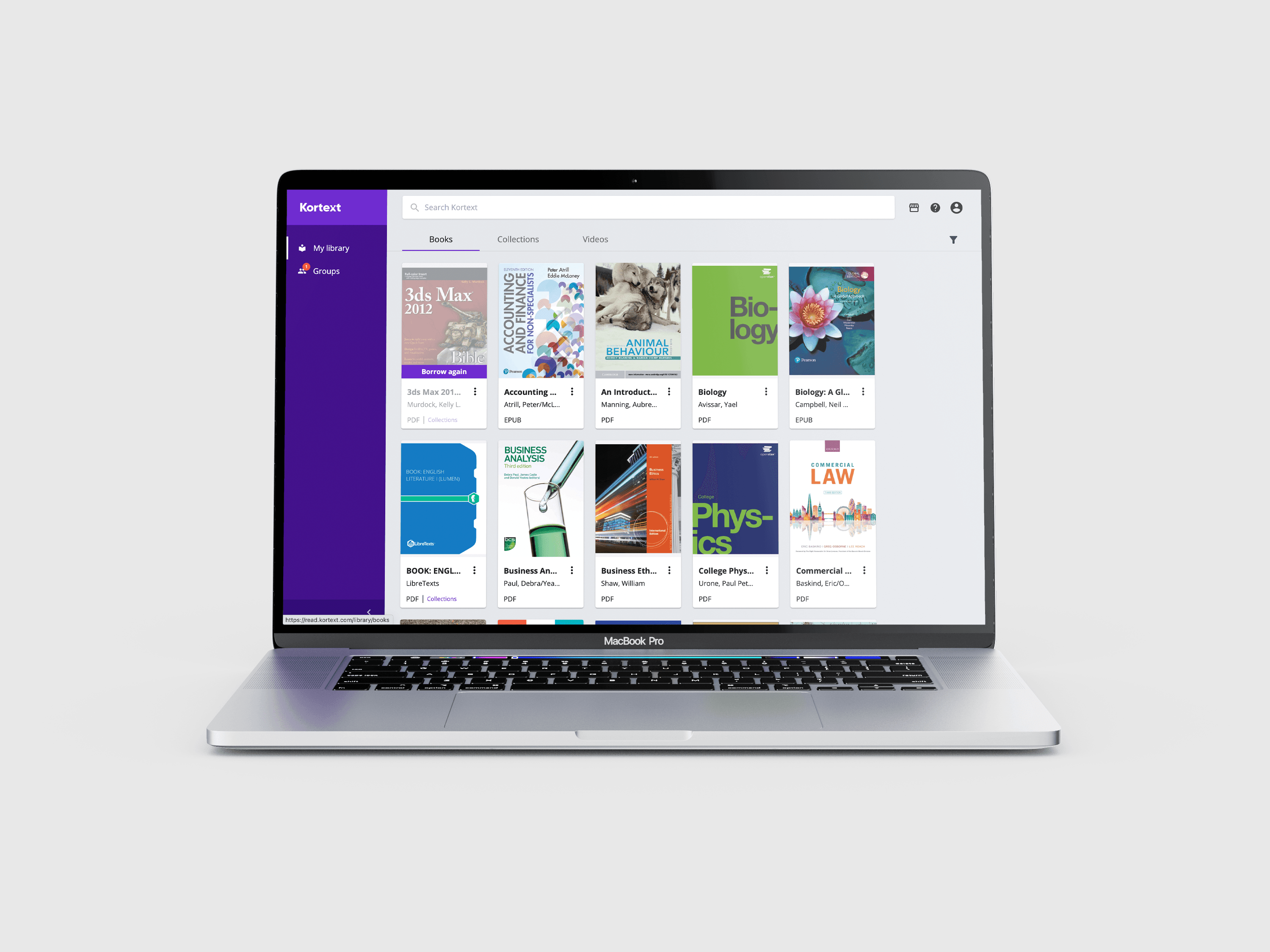
Kortext is an online learning platform giving universities access to over 2 million digital textbooks and learning resources. With 3 million users across 7,000+ institutions globally and £15m raised in 2021, the platform had real scale but a student experience that hadn't kept up with it.
Kortext is an online learning platform giving universities access to over 2 million digital textbooks and learning resources. With 3 million users across 7,000+ institutions globally and £15m raised in 2021, the platform had real scale but a student experience that hadn't kept up with it.
Product design
E-learning
User Research
3m
Users
7k+
Universities uses globally
£15m
raised in 2021
Raised in 2021
Challenge
Kortext was built for librarians and institutions, not the students using it daily. My challenge was to reframe the product around students and build the internal evidence to make that case stick.
Kortext was built for librarians and institutions, not the students using it daily. My challenge was to reframe the product around students and build the internal evidence to make that case stick.
Research & Discovery
We ran focus groups with student ambassadors and visited Bournemouth University in person to observe real usage. What we found was consistent: students weren't using Kortext's own tools - not because they didn't want to, but because the product made them too hard to find.
Key Findings
eTextbook usage had grown post-Covid but print still competed
Most students used free institutional ebooks rather than purchasing
Only 5.88% used Kortext's notes tool 58.82% still took notes by hand
Features existed but weren't discoverable
We ran focus groups with student ambassadors and visited Bournemouth University in person to observe real usage. What we found was consistent: students weren't using Kortext's own tools - not because they didn't want to, but because the product made them too hard to find.
Key Findings
eTextbook usage had grown post-Covid but print still competed
Most students used free institutional ebooks rather than purchasing
Only 5.88% used Kortext's notes tool 58.82% still took notes by hand
Features existed but weren't discoverable
Defining the users
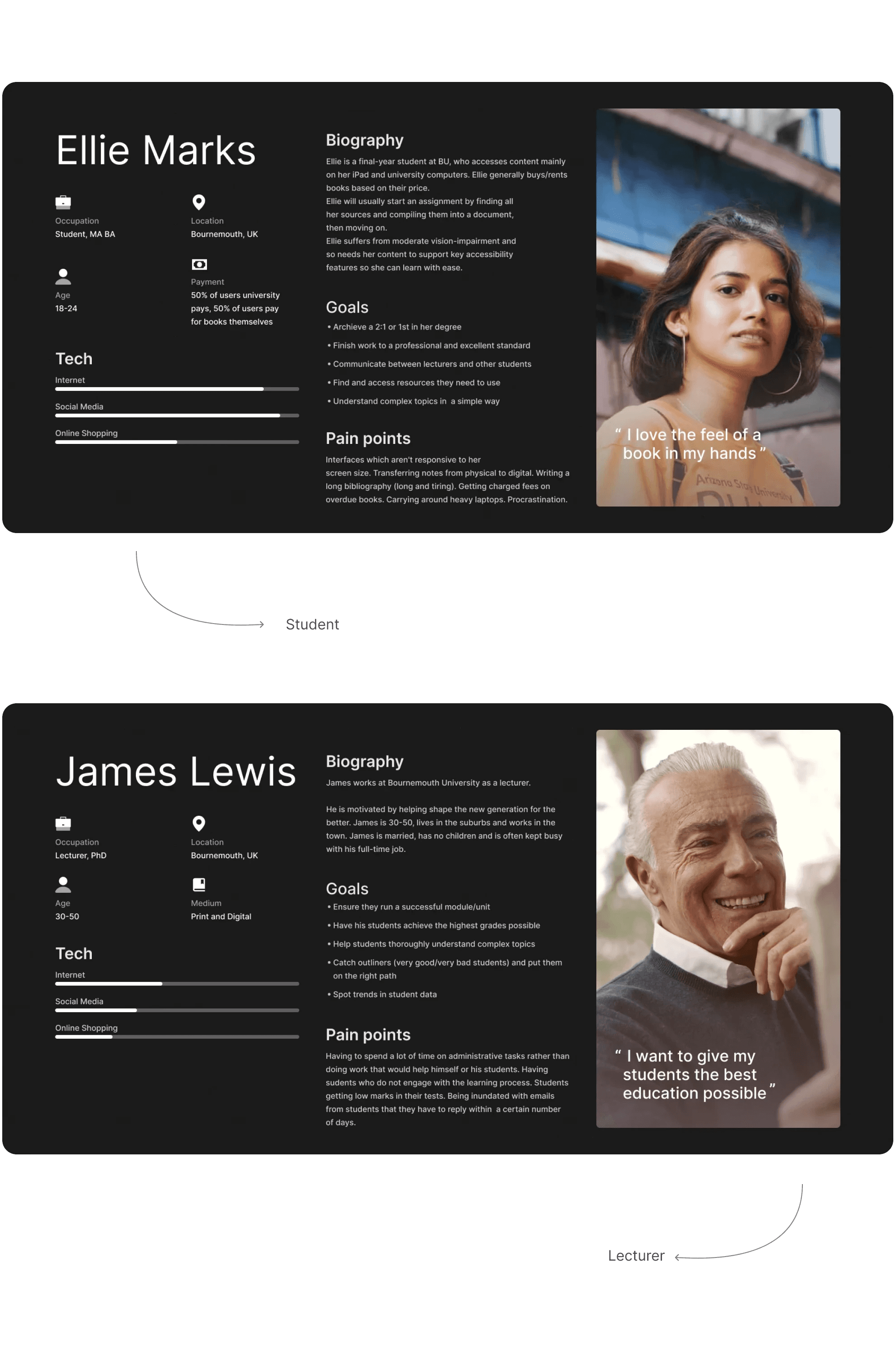
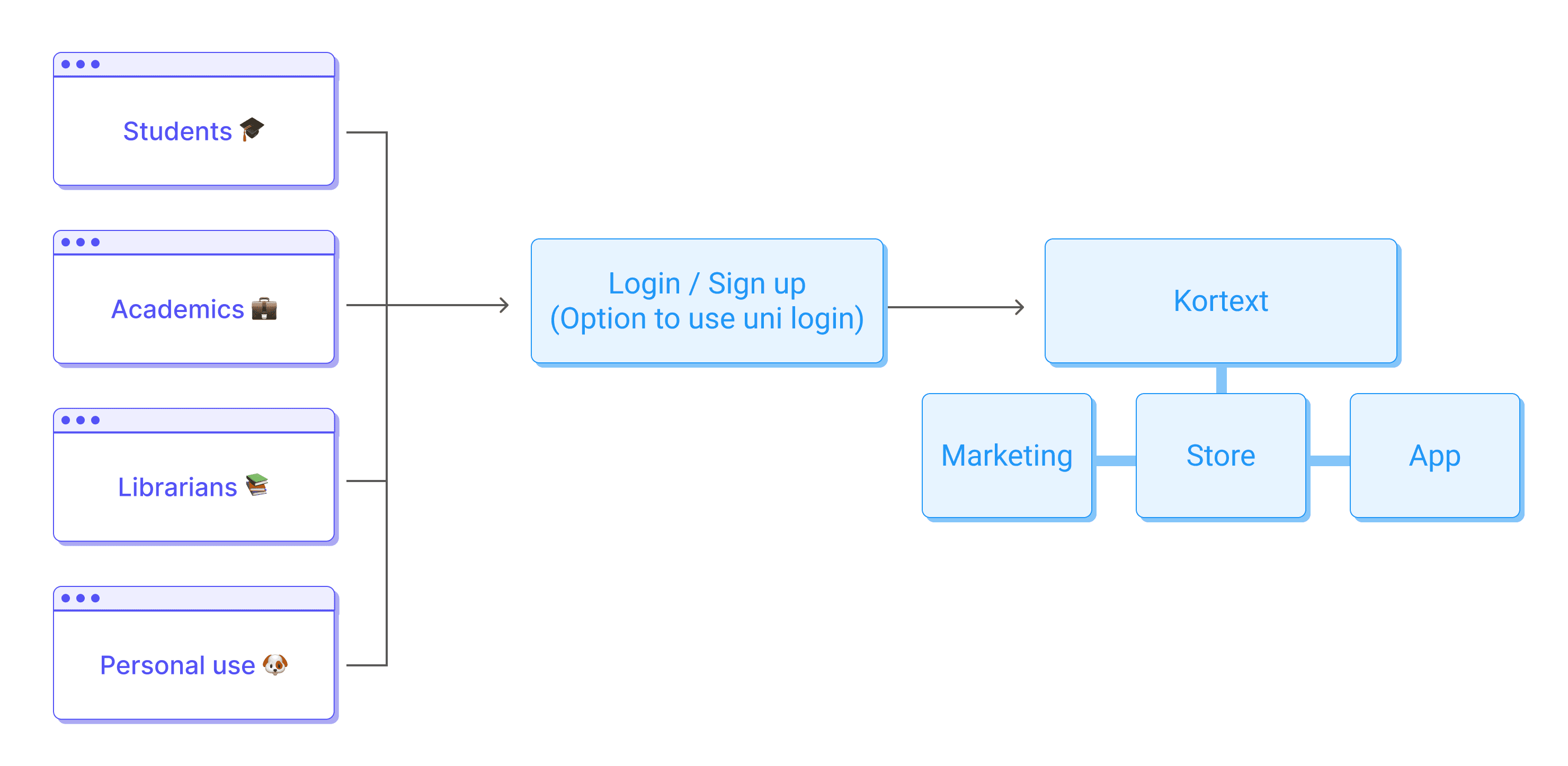
With four user types; students, academics, librarians, and personal users - I identified students as the most underserved. I created two personas grounded in the research to anchor every design decision.
With four user types; students, academics, librarians, and personal users - I identified students as the most underserved. I created two personas grounded in the research to anchor every design decision.
A concrete problem: The login flow
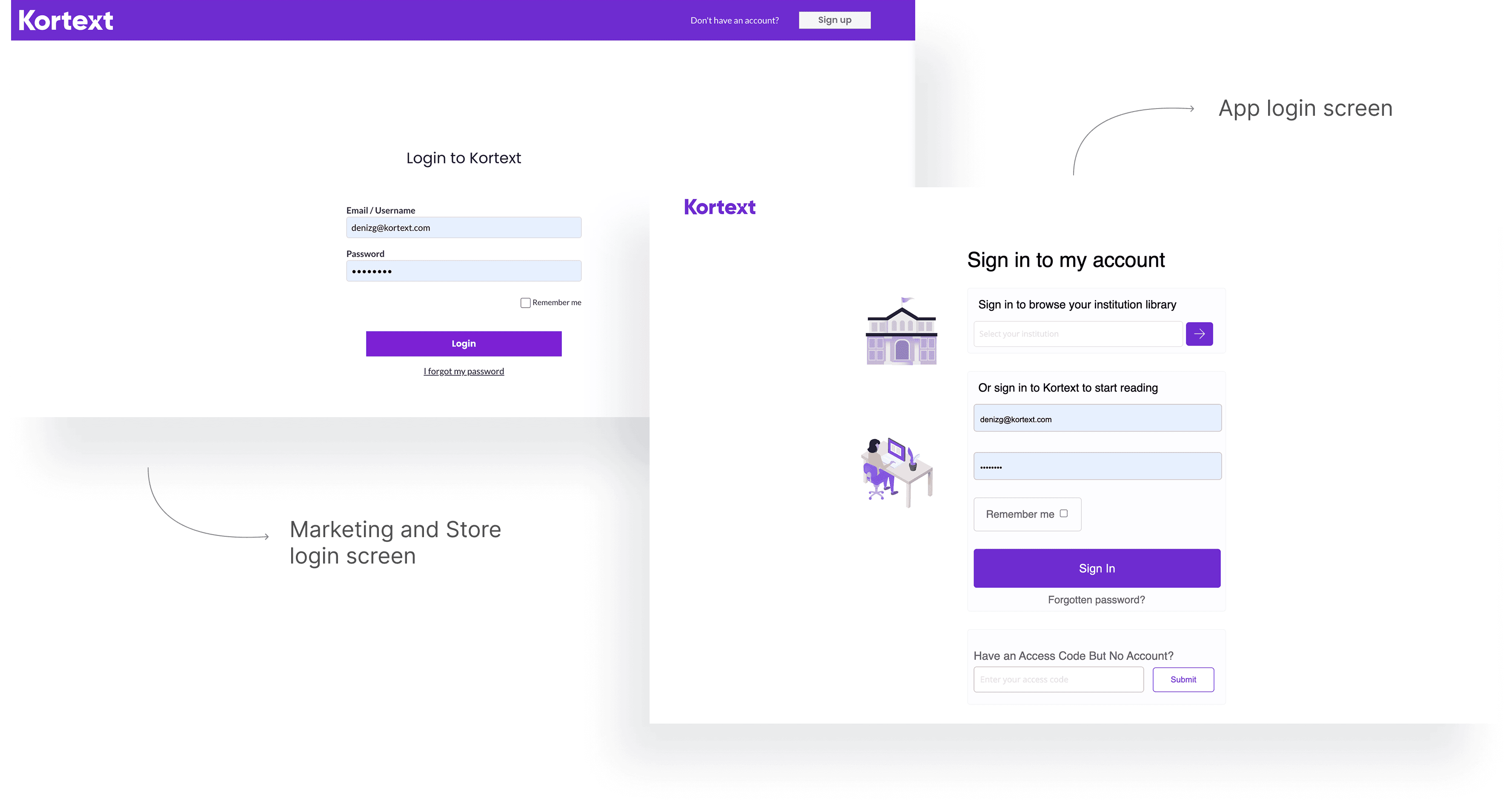
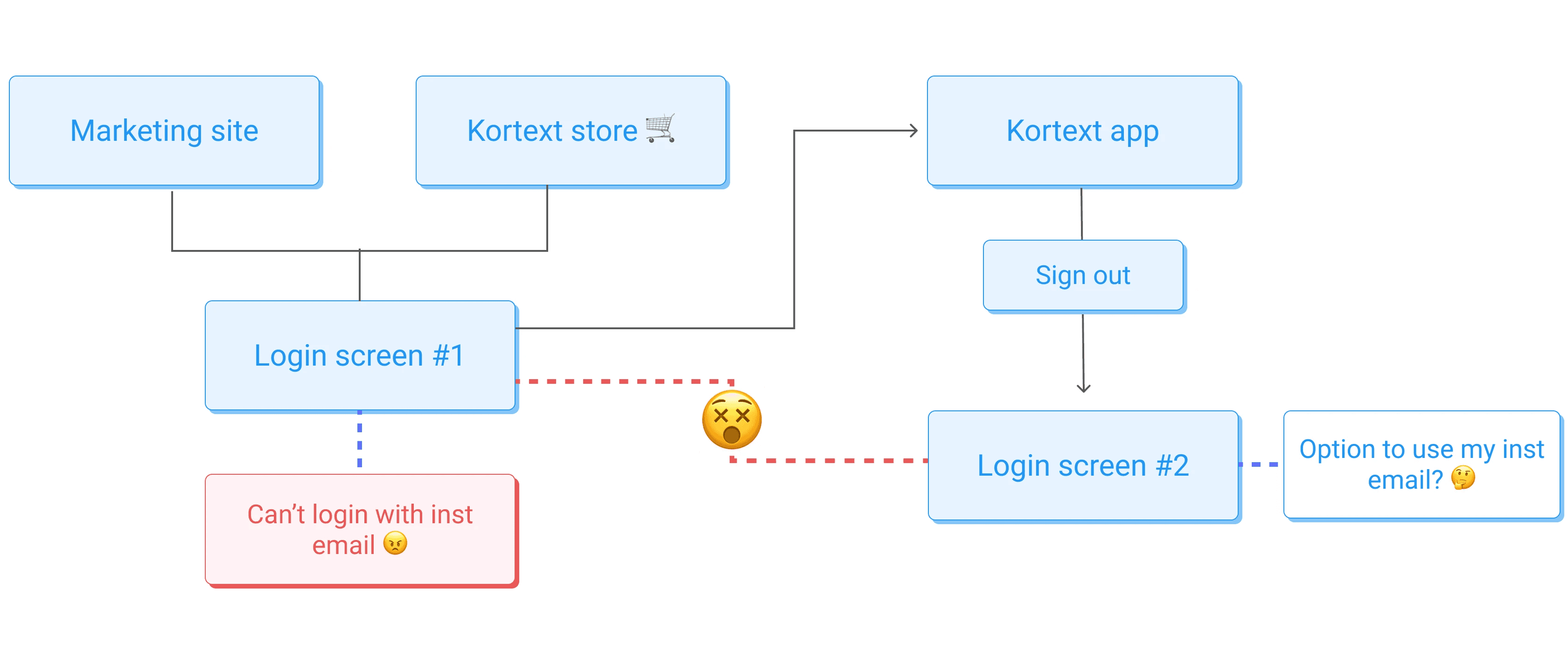
Students faced two separate login screens with no way to use their institutional email on the store side. I mapped the broken flow and redesigned it as a single unified journey - with university SSO as the primary option, social login alternatives, and guest access.
Students faced two separate login screens with no way to use their institutional email on the store side. I mapped the broken flow and redesigned it as a single unified journey - with university SSO as the primary option, social login alternatives, and guest access.
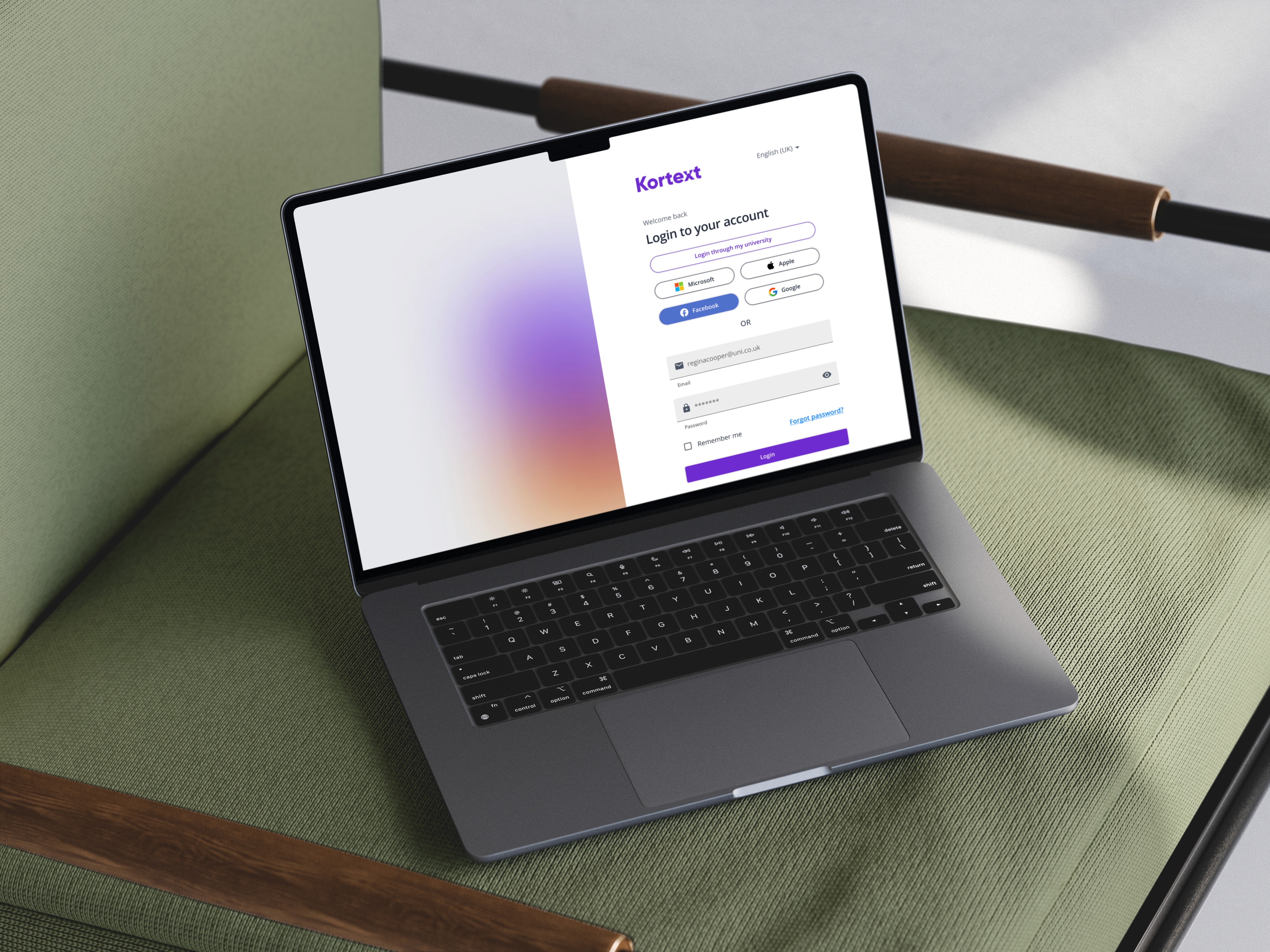
The prototype
A clean, modern login screen bringing the unified flow to life built to be tested with users and handed off to engineering.
A clean, modern login screen bringing the unified flow to life built to be tested with users and handed off to engineering.
Reader UI
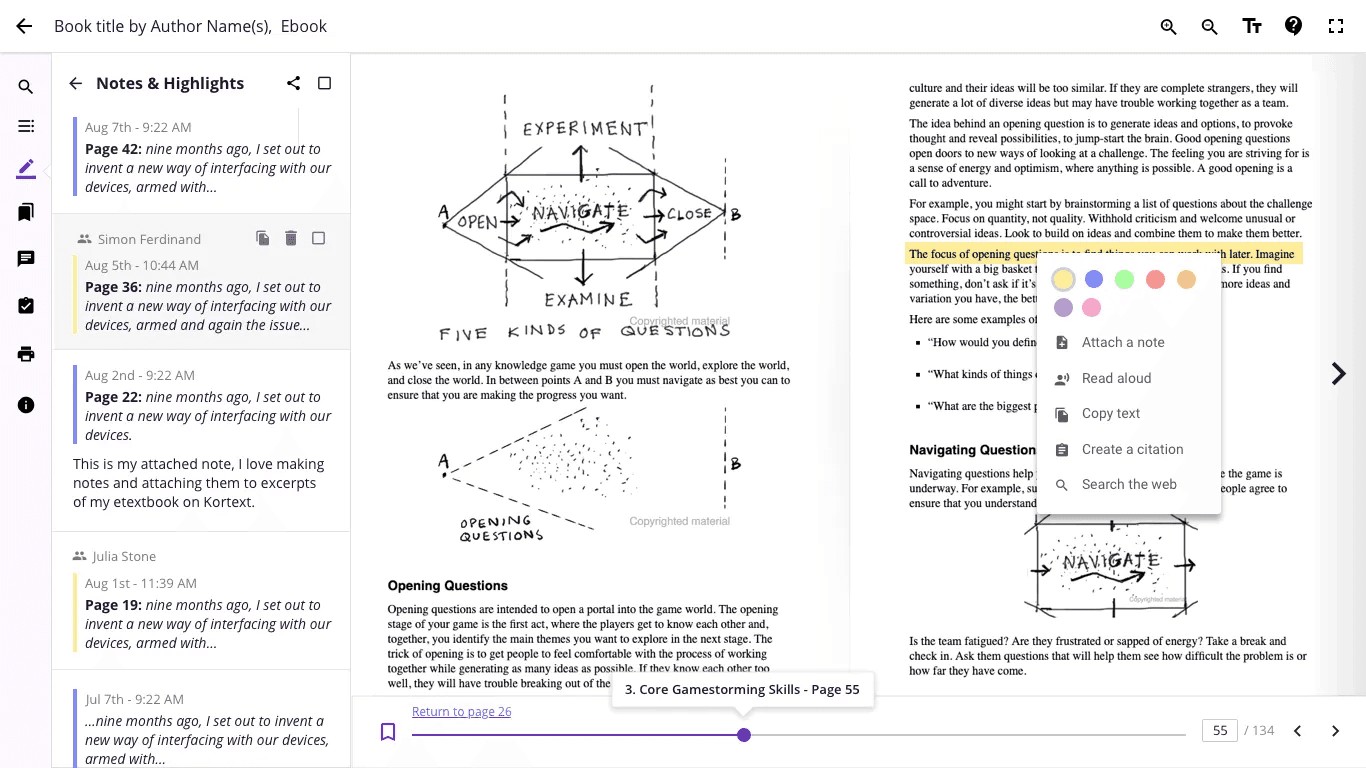
Beyond the research and personas, I also contributed to the core reading experience the part of the product students spent the most time in. The reader UI needed to feel like a genuine study tool, not just a PDF viewer. I worked on the notes and highlights panel, designing a collaborative experience where students could see each other's annotations, add colour-coded highlights, attach notes to specific passages, and create citations all within the reading flow itself.
Beyond the research and personas, I also contributed to the core reading experience the part of the product students spent the most time in. The reader UI needed to feel like a genuine study tool, not just a PDF viewer. I worked on the notes and highlights panel, designing a collaborative experience where students could see each other's annotations, add colour-coded highlights, attach notes to specific passages, and create citations all within the reading flow itself.
Scenario Mapping
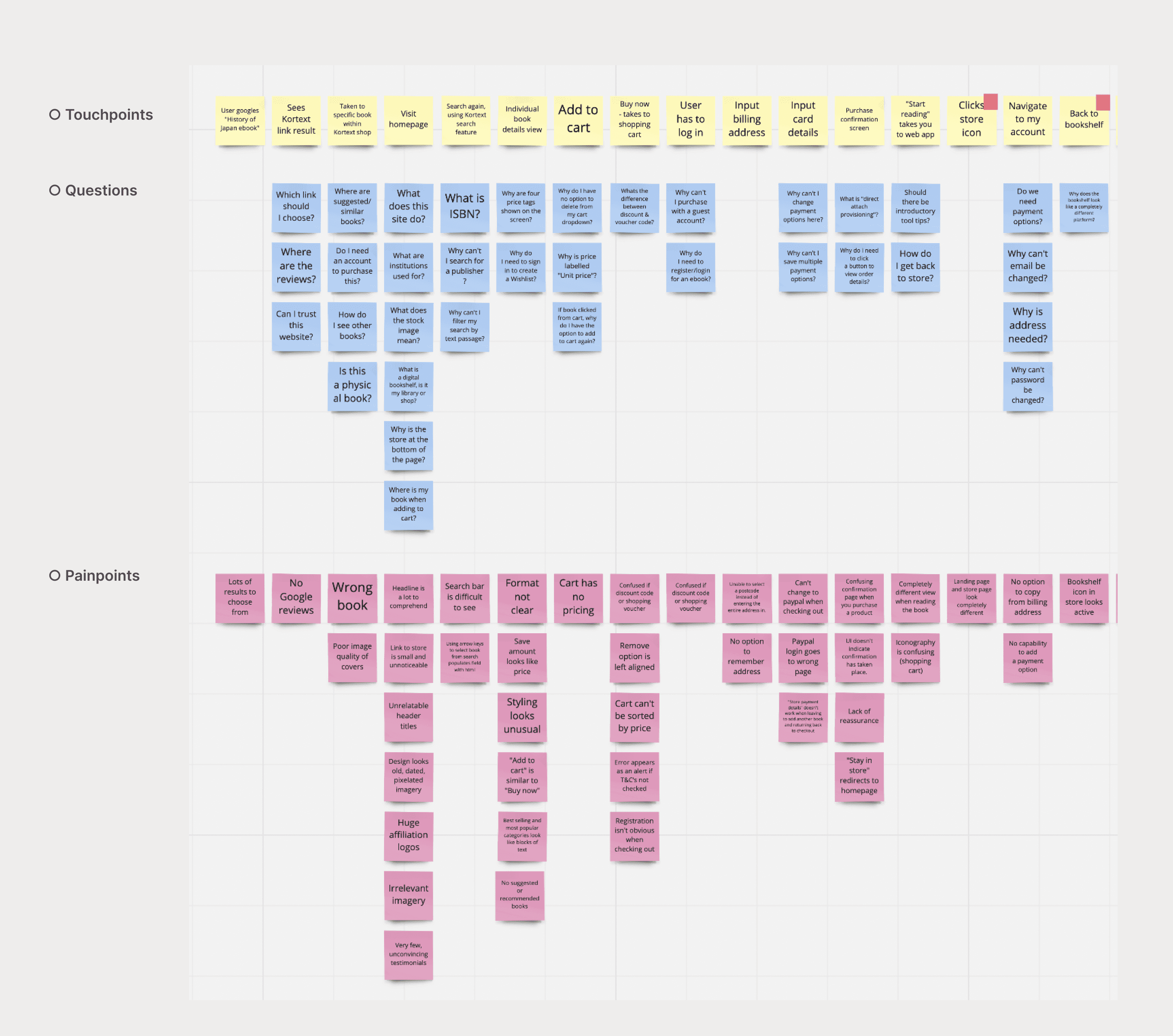
Understanding the complexity of what educational institutions and their different user types face daily was central to the design process. We used scenario maps to plot each user's journey through the product, identifying individual pain points at every step. This wasn't just a documentation exercise - it was a way of asking better questions. At each pain point we'd ask: why does this happen? Who does it affect? What would need to change? That structured thinking fed directly into the design decisions we made.
Understanding the complexity of what educational institutions and their different user types face daily was central to the design process. We used scenario maps to plot each user's journey through the product, identifying individual pain points at every step. This wasn't just a documentation exercise - it was a way of asking better questions. At each pain point we'd ask: why does this happen? Who does it affect? What would need to change? That structured thinking fed directly into the design decisions we made.
Impact
The biggest shift wasn't just visual it was cultural. Kortext had always prioritised the institutions writing the cheques over the students actually using the product. Getting the business to genuinely invest in the student experience was the real design challenge, and the hardest one to solve.
The research, the personas, the scenario maps, the journey flows these weren't just deliverables. They were arguments. Every time a stakeholder pushed back with "but the librarians need this," we had data, real student voices, and mapped journeys to point to. That's how design changes a business from the inside.
With 3 million users on the platform, the stakes were real. A confusing navigation, an inaccessible reader, a login flow that didn't recognise a student's university email these weren't minor UX gripes. They were barriers to learning. Getting them right mattered.
The biggest shift wasn't just visual it was cultural. Kortext had always prioritised the institutions writing the cheques over the students actually using the product. Getting the business to genuinely invest in the student experience was the real design challenge, and the hardest one to solve.
The research, the personas, the scenario maps, the journey flows these weren't just deliverables. They were arguments. Every time a stakeholder pushed back with "but the librarians need this," we had data, real student voices, and mapped journeys to point to. That's how design changes a business from the inside.
With 3 million users on the platform, the stakes were real. A confusing navigation, an inaccessible reader, a login flow that didn't recognise a student's university email these weren't minor UX gripes. They were barriers to learning. Getting them right mattered.